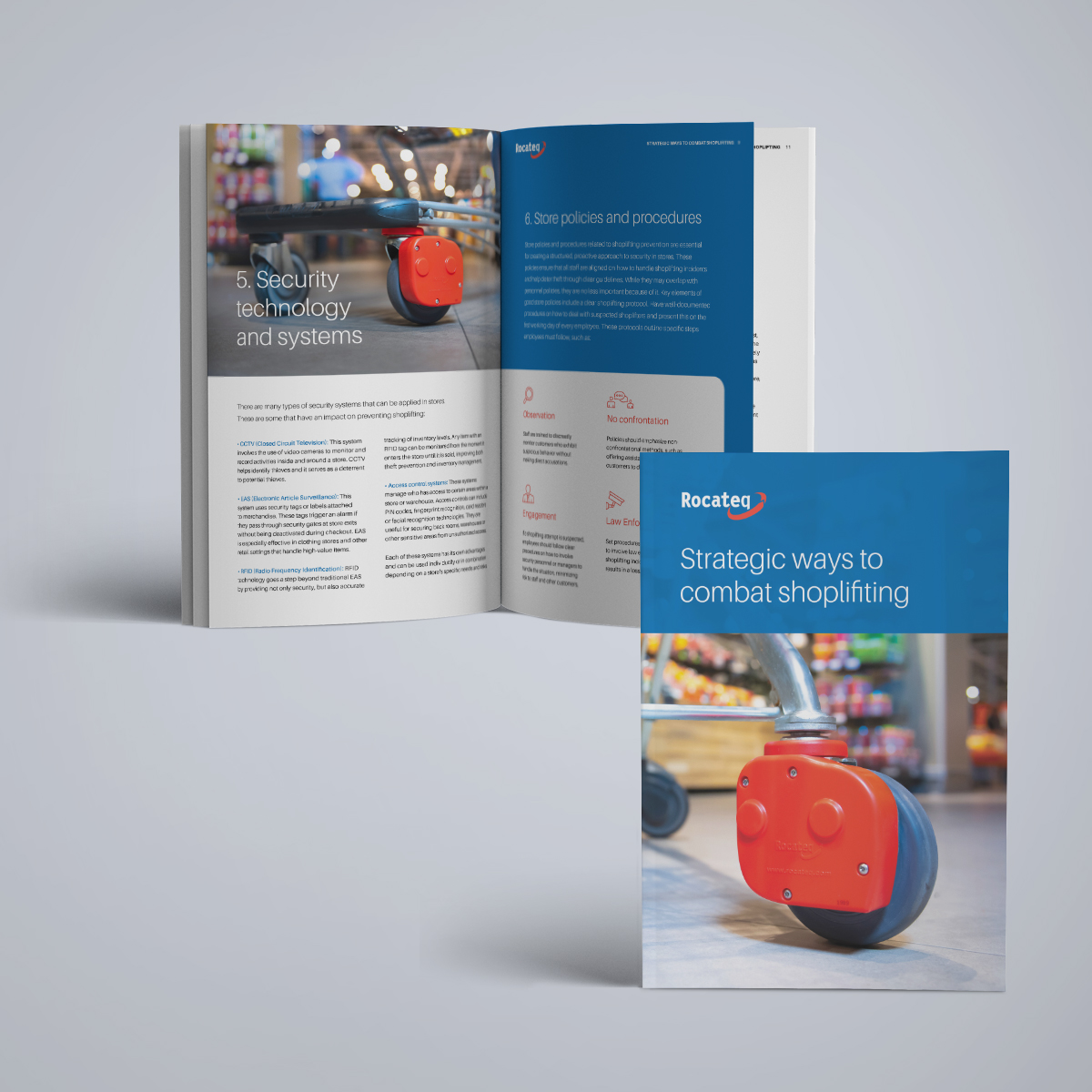

Learn how checkout security prevents shrink and protects razor-thin retail margins. Download our free strategic guide and find out where your store is most vulnerable.
Organised Retail Crime (ORC) has surged dramatically in recent years, with the latest National Retail Security Survey of the National Retail Federation data showing a sharp upward trend. From 2022 to 2023, retailers who track ORC incidents reported a staggering 57% increase in these thefts, underscoring the growing sophistication and scale of criminal networks targeting shops.
The problem extends beyond high-value theft; retailers also experienced a 93% rise in average daily shoplifting incidents in 2023 compared to pre-pandemic levels in 2019, indicating that ORC is increasingly intertwined with broader theft activity. This rise is not only hitting retailers financially but also creating a more dangerous environment for staff and customers. According to the NRF, in 2024 76% of retailers expressed greater concern about ORC in the past year, and 73% observed that offenders are more aggressive or violent.
In announcing the closure of nine shops across New York, Seattle, Portland, San Francisco and Oakland, Target pointed to a pattern of brazen repeat thefts by the same organised crews who would “sweep” shops, grabbing armfuls of high-value items before employees could intervene. One shop manager in East Harlem described how groups would enter in coordinated fashion, distract security near the entrance, and head straight for locked cases of beauty products — often prying them open in seconds. Even with added guards, merchandise protection devices and redesigned aisles, the theft continued week after week, forcing the company to conclude it was “no longer safe” for staff or customers to operate there. The decision drew concern from community leaders who feared the loss would hollow out the neighbourhood: “When a major retailer like Target leaves,” said one retail consultant, “it’s not just jobs that disappear — customer traffic drops, suppliers pull back and the whole commercial ecosystem weakens.”
Organised Retail Crime (ORC) gangs increasingly rely on coordinated tactics that exploit both physical shop vulnerabilities and digital resale opportunities. One common method is the micro-gang blitz, where small coordinated groups overwhelm shop staff using distraction and speed. The NRF notes that “groups of three to five individuals entering together to create confusion and block employees” has become a rising trend, allowing thieves to grab high-value items and flee before intervention.
Another growing scheme involves self-checkout manipulation: offenders frequently use what retailers term “scan-avoidance techniques,” including “ticket switching and non-scanning at self-service lanes,” according to the National Retail Security Survey report (2023). These tactics allow offenders to appear as legitimate customers while concealing large-scale theft. Once merchandise is stolen, ORC networks rely on sophisticated online resale channels – or e-fencing – to rapidly move product “through online marketplaces where tracing provenance is difficult,” the NRF states, often blending stolen goods with legitimate stock to escape detection. These coordinated methods create a highly efficient pipeline that enables repeat thefts, challenges loss-prevention teams, and fuels ORC operations nationwide.
In 2025, organised shoplifting is evolving with increasingly sophisticated and networked methods that make theft faster, smarter, and more scalable. One of the most worrying developments is the use of AI-supported tools to identify high-value, easily saleable items, allowing criminals to quickly scan stock levels, price data, and supply chain feeds to select the most profitable goods to steal.
In addition to smarter targeting, there is also greater mobility, as ORC groups operate in shop-hopping gangs, travelling across multiple cities or even states in rental cars or stolen vehicles to rob multiple retail locations in quick succession while staying ahead of local police. Coordination of these types of thefts is no longer limited to in-person meetings; instead, these groups are increasingly organised through private social media groups and encrypted messaging apps, where plans are shared, roles are assigned, and stolen items are offered for sale within hours of a theft.
These emerging trends paint a picture of ORC networks that operate more like flexible start-ups than traditional shoplifting gangs, with technology playing a major role. The efficiency with which thieves strike should prompt supermarkets to combat theft efficiently and make use of the same developments in AI and technology.
Shrinkage isn’t just a cost problem — it’s a sales problem. ORC gangs know where stores are vulnerable. Let us help you reframe loss prevention as sales protection, starting with a free consultation.
Whether a retailer is likely to become a prime target for Organised Retail Crime increasingly depends on three interlocking factors: store location, product mix, and overall position on the security maturity model. According to recent data, 65% of all shoplifting incidents occur in urban-area stores, making them far more heavily targeted than locations in rural settings. Meanwhile, retail theft at suburban shopping centres has climbed by 23% since 2022, underscoring that shrink is rising not only in city centres but also in traditionally lower-risk suburban environments. Next, retailers that stock a product mix rich in high-value, easily concealable goods — such as cosmetics, designer apparel, electronics, alcohol, and pharmaceuticals — are at even greater risk, as such items fetch high returns on secondary markets with relatively little effort.
However, location and products alone don’t seal a store’s fate; what often determines whether it becomes a consistent target is where it sits on the security maturity model, ranging from basic “reactive” measures (such as CCTV and uniformed guards) to more advanced, “proactive” measures such as incorporating data analytics, coordinated law-enforcement partnerships, and real-time loss-prevention intelligence. Retailers who remain stuck in the lower segment of this model, apply limited staff training, rely on CCTV and only respond to shoplifting after it has occurred, often face repeated and escalating attacks from the same ORC gangs. Retailers who invest in more advanced security measures can deter, disrupt, and detect criminal activity before it takes hold.
Front-line defences in retail are increasingly combining physical barriers with intelligent technology to prevent theft:
Together, these measures create a layered defence strategy, combining physical control, behavioural monitoring, and predictive intelligence to reduce losses and deter both opportunistic and organised retail crime.
Effective loss prevention in retail depends not only on technology but also on people and process adjustments that strengthen staff readiness and response. Staff situational awareness training equips employees to recognise suspicious behaviours, understand common ORC tactics, and respond confidently without escalating risk.
In addition, incident response manuals provide clear, step-by-step procedures for dealing with theft, from initial detection to documentation and follow-up, ensuring consistency and reducing errors under pressure. Beyond internal measures, retailers increasingly engage in collaboration with law enforcement and Organised Retail Crime Associations (ORCA) groups, sharing intelligence on repeat offenders, high-risk products, and emerging ORC trends. By combining trained staff, structured processes, and external partnerships, retailers create a proactive environment that can detect, deter, and disrupt theft more effectively than relying on technology alone.
Future-proofing a retail store against theft and ORC requires a structured, step-by-step approach that combines continuous evaluation, intelligence, and strategic investment:
1. Implement continuous audit cycles. Conduct regular reviews of store layouts, security systems, and shrink reports to uncover vulnerabilities, monitor trends, and adjust defences proactively. A thoughtfully designed layout not only helps prevent theft but also enhances the shopping experience. By reducing blind spots and improving sight lines, the store feels open and inviting while maintaining a secure environment. The key is subtlety, integrating security seamlessly into the store’s design so that it deters theft without making genuine customers feel controlled or uncomfortable.
2. Leverage data-driven decision making. Use analytics from POS systems, CCTV, and exception reports to identify high-risk products, optimise staffing, and shape loss-prevention strategies based on concrete data rather than assumptions. Modern video surveillance goes far beyond simple recording, combining high-definition cameras with intelligent analytics to serve as proactive loss-prevention tools. These systems can detect suspicious behaviours—like merchandise concealment or prolonged loitering in vulnerable areas—and immediately alert security personnel for rapid response. By pairing AI-driven insights with human oversight, retailers can monitor expansive store areas more efficiently, with some pilot programmes reporting up to a 30% reduction in shrinkage. This approach is especially effective in large-format stores, locations with blind spots, or environments experiencing high levels of Organised Retail Crime (ORC). Beyond prevention, these systems generate time-stamped evidence that supports internal investigations and law enforcement, enhancing both security and accountability.
3. Budget for layered security. Strategically allocate resources across multiple defensive layers—from perimeter controls and smart sensors to staff training and partnerships with law enforcement—to keep stores resilient as ORC tactics evolve. For retailers with multiple locations and mobile staff, the goal isn’t just maintaining security but ensuring every pound in the security budget delivers real impact. Leveraging objective crime risk data allows budgets to be allocated based on actual threats rather than evenly across all sites or reacting after incidents occur. This approach protects employees and customers, safeguards profits, and maximises ROI. Misallocated security funds can both waste money and leave stores vulnerable to preventable losses. Underestimating risk at high-threat locations can endanger people and brand reputation, while overspending on low-risk sites ties up resources that could be more effectively deployed elsewhere.
By following these steps, retailers create a proactive framework that not only addresses current threats but also adapts to emerging risks, making the store safer for staff and customers while protecting profitability.
Spot the weak spots in your store and learn what to fix first.
Download the guide