
A cart containment system is designed to save your team time. With fewer carts leaving the property, there are fewer retrieval runs, fewer wheel repairs, and fewer complaints from neighboring businesses. When the system is functioning properly, it becomes a seamless part of your operations.
However, many store teams find that theirs does the opposite. Instead of saving work, it creates more work, resulting in manual resets, service calls, wheel replacements, and carts that end up three blocks away. If that sounds like your store, your system may be costing you more than it saves.
Below are five of the most common problems with cart containment systems, along with an explanation of how a system that actually reduces workload works differently.
How does a locked wheel become unlocked? If the answer involves an employee walking out to the edge of the parking lot with a key or handheld device, then your system is creating more work instead of eliminating it.
Each of those trips means time away from serving customers, stocking shelves, and managing the front end. On a slow Tuesday, it’s an annoyance, but not a major one. However, on a busy Saturday with locked carts scattered all over the property, it’s a real drain on an already overworked team.
The shopping cart’s locking wheels are a clear sign that the system was not designed with the store in mind. Not only is manual unlocking time-consuming. Carts only get freed when someone has a spare minute, causing them to pile up and reducing cart availability when you need it most.
A good system wouldn’t require your staff to do this. The wheel should release the moment the cart is pulled back toward the store. There’s no need for a key, handheld device, or walk across the parking lot.
Get your shopping cart wheel replacement numbers. If the numbers are increasing, your containment system is probably the cause.
Some systems stop a cart by bringing the wheel to an immediate halt the second it crosses the boundary. This hard stop grinds flat spots into the wheel. A flat-spotted wheel drags, wobbles, and thumps across your floor. Once one wheel is damaged, the entire cart will ride rough and should be taken out of service.
The costs add up quickly: new wheels, labor to install them, idle carts, and customer complaints about carts that pull to one side. Since none of these costs appear on reports as “containment costs,” the problem often goes unnoticed for a long time.
A better system would prevent damage from happening in the first place. Rather than locking suddenly, the wheel would brake gradually, much like the anti-lock brakes in your car. The cart would come to a smooth, controlled stop, eliminating any impact that could damage the wheel. This would result in fewer flat spots, fewer replacements, and less time spent monitoring the fleet.
Good equipment fails gracefully. Poor equipment, however, can transform a minor malfunction into a complete outage.
With some systems, replacing a single failed part requires replacing the entire unit. You usually can’t see it coming, either. There’s no way to monitor the system’s performance, so you only find out about a problem when a store reports it. While you wait for a technician, the carts remain unsecured. The gap the system was designed to close opens up again.
Cart containment maintenance can sneak up on you, resulting in more service trips, downtime, and wasted time and parts.
A lower-maintenance system is designed for on-the-spot repairs. Modular parts allow your team to replace a worn piece in minutes instead of spending days pulling carts. With real-time performance visibility, you can identify issues early on, before a lot full of carts that won’t lock becomes a problem. You’ll experience less downtime and fewer service calls.
This is the most important issue because the main reason you bought the system was to prevent carts from leaving the property.
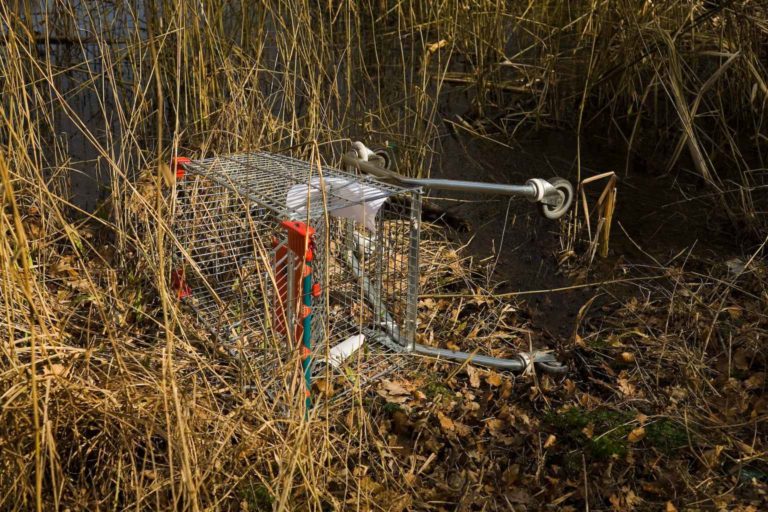
Ask yourself a simple question: Are carts still leaving? If your team is driving around the neighborhood to collect them, if you’re receiving calls from nearby businesses and residents about missing carts, or if the city is mailing retrieval notices and fees, then the system isn’t fulfilling its primary function. Anything else the system does well is beside the point.
This is where a failing cart containment system becomes costly. Every missing cart means the possibility of a replacement, a retrieval trip, and increasingly, a municipal fine. These costs are allocated to different budgets, so no one sees the total amount, but they’re real. The single biggest hidden cost of an ineffective cart containment system is often retrieving carts that should never have left.
An effective system prevents carts from leaving the property in the first place. When containment is effective, fewer carts need to be retrieved, replaced, or fined.
A containment system should be invisible to customers. If honest shoppers start to notice it, then there’s a problem.
You’ll only notice it when a shopping cart is locked in the wrong place. For instance, the cart could get stuck in the middle of the parking lot if the boundary shifts due to repaving or nearby construction. Alternatively, a cart could jam so hard that a shopper is suddenly stuck with a cart that won’t budge. Now, an associate must walk out, apologize, and free the cart by hand. The customer will leave with an even worse impression than when they arrived.
The problem isn’t containment itself. The problem is a system that’s sloppy about where and how it stops carts. A crude setup that locks hard, drifts out of calibration, or cannot release independently turns a background safeguard into something that customers actually notice.
A good system is precise and gentle, so it avoids all that. It stays calibrated so that it only activates at the actual boundary. It stops carts smoothly instead of abruptly and releases independently when a cart returns. Honest shoppers barely notice it, which is the whole point.
One of these signs could be a fluke. However, if you see two or three of them together, it means your current setup is working against you. It adds labor, wears out hardware, piles up service calls, and allows carts to leave anyway.
The real question is how much all of that adds up to in a year, including resets, wheels, service visits, retrieval runs, and fines. Most retailers have never compared those numbers. That’s why the total is almost always higher than expected.
If so, it’s time to find out how much it’s really costing you. Our whitepaper lays out the full cost structure, provides a simple sizing method for your stores, and shows you what to look for in a system that will reduce your team’s workload.
Download the whitepaper